

Let's be honest, when your heat or air conditioning dies, the first thing that pops into your head is, "How much is this going to cost me?"
On average, a typical HVAC repair lands around $350. But that's just a ballpark number. A simple fix might only set you back $100, while a major part replacement could easily climb over $3,000. That's a huge range, and it shows just how much the final bill can depend on what’s actually wrong.
Your Quick Guide To Average HVAC Repair Costs
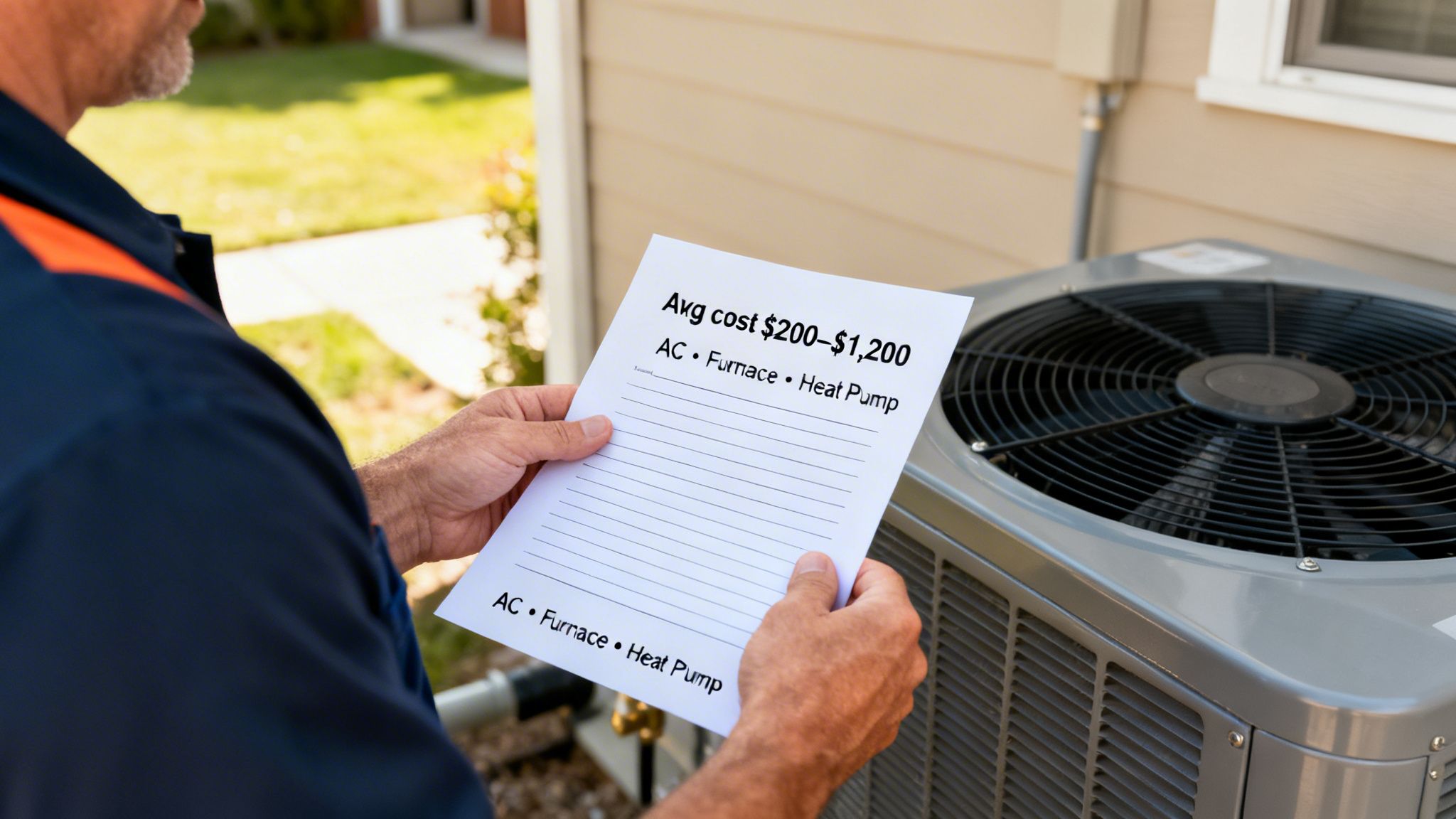
Knowing the potential costs ahead of time helps you budget and make a smart decision without the stress of being caught off guard. The total price tag is all about the specific problem, but thankfully, most common repairs fall into pretty predictable ranges.
The process almost always starts with a diagnostic fee. This initial charge, usually between $100 to $250, covers the technician's travel time and the expertise it takes to accurately figure out what's wrong with your system. Think of it as paying for a professional diagnosis before you get the prescription.
What's Up With The Diagnostic Fee?
This service call fee is a standard practice in the industry, and it's what allows a technician to give you an accurate, detailed quote for the real repair. Once they’ve pinpointed the issue, they'll lay out a clear estimate for the necessary parts and labor.
As a nice bonus, some companies will credit that diagnostic fee toward the final repair cost if you decide to move forward with them. It’s always worth asking about.
Just remember, this initial fee is separate from the actual fix. For instance, if the tech finds out your AC just needs a new capacitor, your final bill will include the diagnostic visit plus the cost of the part and the labor to install it.
Homeowners often start with a diagnostic fee of $100 to $250, after which technicians charge either a flat rate or $100 to $250 per hour plus parts. Detailed repair costs can vary significantly, from a simple drain line cleaning to major component replacements. You can read more about typical HVAC repair expenses on Angi.com.
Average Cost For Common HVAC Repairs
To give you a clearer picture of what to expect, we put together a table of the most frequent HVAC repairs and what they typically cost. These are national averages, so they're a great starting point for understanding a quote from a local pro.
Air Conditioner AC Capacitor Replacement $120 – $400 Air Conditioner Refrigerant Leak Repair & Recharge $250 – $1,600 Air Conditioner Condenser Fan Motor Replacement $200 – $700 Furnace Furnace Ignitor Replacement $150 – $450 Furnace Blower Motor Replacement $400 – $1,500 Furnace Flame Sensor Cleaning/Replacement $80 – $300 Heat Pump Reversing Valve Replacement $450 – $1,200 Heat Pump Thermostat Malfunction Repair $100 – $350Keep in mind that these are just estimates. The final price can be influenced by the age of your system, parts availability, and even labor rates in your specific area.
Decoding Your Bill: What Influences The Final Cost
When you get a final invoice for an HVAC repair, it's more than just a single number. The total is a sum of several moving parts, and understanding them helps you see exactly where your money is going. Think of it like a restaurant bill—the main dish is just one part of the total cost, which also includes drinks, appetizers, and tax.
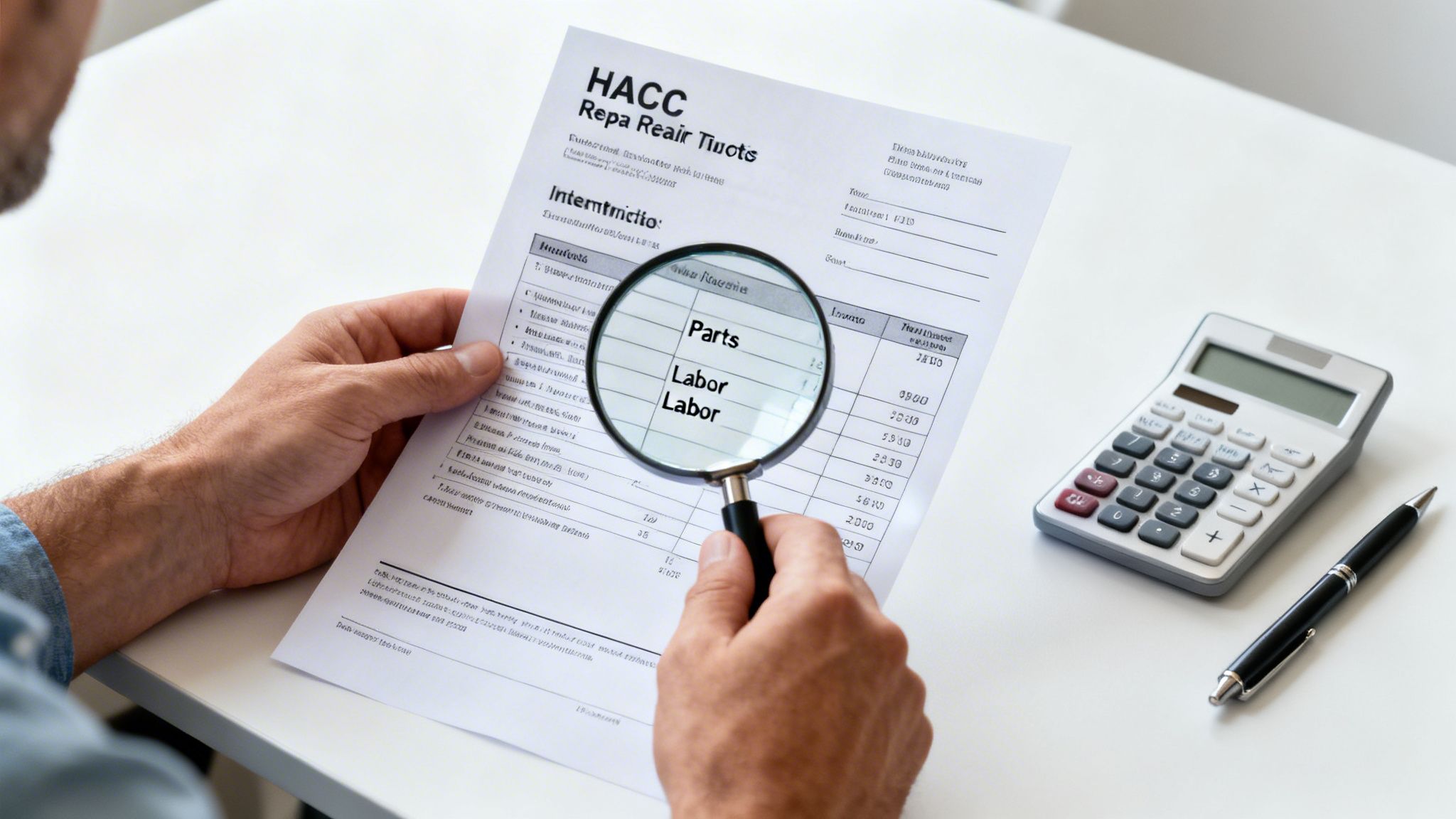
Let's break down the key factors that shape the final price tag for your repair.
Parts And Labor: The Two Core Components
At its heart, every repair bill boils down to two things: what was fixed and who did the fixing.
Parts are the physical components—like a new capacitor, blower motor, or flame sensor—that need to be replaced. Their costs can swing wildly, from a $25 part to one that costs $600 or more.
Labor is the fee for the technician’s time, skill, and expertise. This is usually charged by the hour, and rates often fall between $75 and $150 per hour. This fee covers their training, diagnostic tools, and the time it takes to accurately pinpoint and solve the problem.
The Age And Condition Of Your System
The age of your HVAC unit is a huge factor. Working on a newer system is often more straightforward because parts are readily available and the technology is familiar to most technicians.
But if you have a vintage system, things can get tricky. A technician might need to spend extra time hunting down a specific component for a 20-year-old furnace, and that search time gets reflected in the final bill. Older units can also be more complex to diagnose, adding to the labor costs.
Location And Regional Labor Rates
Where you live matters. Labor rates aren’t the same everywhere in the country; they’re shaped by the local cost of living, the demand for service, and how many certified technicians are in the area.
For example, an HVAC tech’s hourly rate in a big city like New York or San Francisco will almost certainly be higher than in a small rural town. That difference directly impacts the labor portion of your repair bill.
Emergency And After-Hours Service Fees
HVAC systems have a knack for failing at the worst possible times—like a sweltering holiday weekend or the coldest night of the year. When you need help right now outside of normal business hours, you can expect to pay a premium.
Emergency service calls often come with a higher trip fee, sometimes $150 to $250 or more, just for the technician to come to your door. This surcharge is for their on-call availability and the inconvenience of working nights, weekends, or holidays. It costs more, but it ensures you get help when you desperately need it.
Your HVAC System’s Warranty Status
A valid warranty can be a huge financial relief. Most manufacturer warranties cover the cost of replacement parts for a set period, often five to ten years. If your system is still under this warranty, you’ll only be responsible for the labor costs.
But—and this is a big but—you have to read the fine print. Most warranties require proof of annual maintenance and proper registration when the unit was installed. If those conditions weren't met, the warranty could be void, leaving you on the hook for the full cost of both parts and labor.
Real-World Scenarios: How an HVAC Repair Bill Comes Together
Knowing the individual cost factors is helpful, but seeing them play out in a real-world repair scenario makes everything click. To connect the dots, let's walk through three stories that homeowners run into all the time—from a minor weekend hassle to a major budget decision.
Each of these examples breaks down a sample invoice, showing exactly how the diagnostic fee, parts, labor, and other charges add up to create the final bill you see.
Scenario 1: The Sweltering Summer AC Capacitor Fix
Picture this: It's the hottest Saturday in July, and your AC suddenly gives up. The unit outside is humming, but there’s no cold air coming through the vents. You make the call for emergency service.
The technician arrives and quickly spots the problem—a failed AC capacitor. This small, cylinder-shaped part is vital; it gives the system's motors the kickstart they need to run. It's a super common and relatively simple fix. But since it's a weekend, the emergency call-out fee comes into play.
Sample Invoice Breakdown: Capacitor Replacement
- Emergency Diagnostic Fee: $180 (Weekend call-out)
- Part Cost (Dual Run Capacitor): $45
- Labor (30 minutes @ $120/hour): $60
- Total Cost: $285
In this situation, the emergency fee is the biggest chunk of the bill. If that same capacitor had failed on a Tuesday morning, the total would have been closer to $150. It’s a perfect example of how timing alone can nearly double the cost of a simple repair.
Scenario 2: The First Winter Chill & a Furnace Ignitor Failure
The first truly cold night of the season finally arrives. You head to the thermostat and crank up the heat for the first time in months. You hear the furnace click on as usual, but... no warm air. Nothing.
A technician comes out the next day and finds the culprit: a cracked hot surface ignitor. Think of it like a sophisticated matchstick that lights the gas in your furnace. They’re built to get incredibly hot, but over time they become brittle and eventually fail.
This is a solid mid-range repair. It's not an emergency, so you dodge those premium fees. The part is a bit more specialized than a capacitor, though, and getting to it takes a little more finesse.
- Standard Diagnostic Fee: $95 (Credited toward repair)
- Part Cost (Hot Surface Ignitor): $85
- Labor (1 hour @ $120/hour): $120
- Total Cost: $205
Here, the cost is split pretty evenly between the new part and the technician's time. It took about an hour to carefully open up the furnace, swap out the fragile ignitor, and run a full heating cycle to make sure everything was firing up correctly. For homeowners who like to stay ahead of problems, learning about different types of HVAC repairs can help you spot the warning signs early.
Scenario 3: The Big One—A Blown AC Compressor
Your 12-year-old air conditioner has been on its last legs for a while. It's been making some weird noises and just hasn't been keeping up with the summer heat. Then one afternoon, it gives out with a loud, final clank. The diagnosis is the one every homeowner dreads: a seized compressor.
The compressor is the heart of your AC, pumping refrigerant through the system. Replacing it is one of the most expensive repairs you can face.
This is a major, high-cost job that forces a tough decision: repair or replace? The compressor itself is an expensive component, and the labor is intense. It requires specialized equipment to safely handle the refrigerant according to federal regulations.
Diagnostic Fee Standard service call to identify the failure $125 Part Cost New OEM compressor unit $1,200 Labor 4-6 hours for removal, installation, and testing $600 Refrigerant & Supplies Recharging the system and other required materials $250 Total Repair Cost $2,175This scenario shows how a single failed part can quickly escalate into a bill north of $2,000. The cost is driven by both the pricey component and the hours of skilled labor needed to recover the old refrigerant, install the new compressor, and get the system properly recharged and tested.
Deciding Between A Major Repair Or A Full Replacement
When a technician hands you a hefty repair quote for something major like a compressor, you’re suddenly faced with the big question: should I fix this thing, or is it time to replace the whole system? It's a tough spot to be in. You're weighing the immediate hit to your wallet against the long-term value of a brand-new, more efficient unit.
Making the right call here isn't just about the upfront cost. You've got to step back and look at the bigger picture—your system's age, how often it's been acting up, and what it’s costing you on your monthly energy bills. The last thing you want is to throw good money after bad on a system that's already on its last legs.
Using The 5,000 Rule As A Quick Guide
A handy rule of thumb many HVAC pros use to simplify this decision is the "5,000 Rule." It's a straightforward calculation: multiply your unit's age in years by the estimated repair cost. If that number comes out to more than $5,000, replacement is probably the smarter financial move.
Let’s say you have a 12-year-old air conditioner and the repair is quoted at $500. The math looks like this: 12 years x $500 = $6,000. Since that's over the $5,000 mark, it’s a strong indicator that putting that money toward a new system is the better long-term investment.
This rule isn't set in stone, but it’s an excellent gut check. It gives you a quick way to gauge whether sinking a chunk of change into an older piece of equipment really makes sense.
Key Factors To Consider Beyond The Math
While the 5,000 Rule is a great starting point, a few other critical factors should weigh into your decision. Your system’s age, its recent track record, and its efficiency are all huge pieces of the puzzle.
- System Age: Most HVAC systems are built to last 15-20 years. If your unit is already over 12 and staring down a major repair, that repair money is often better spent as a down payment on a new, reliable system. For a clearer picture of your unit's timeline, you can learn more about how long HVAC systems typically last.
- Frequency of Repairs: Is this the first time you’ve had to call for a repair in years, or are you and your HVAC tech on a first-name basis? If you've already paid for several repairs in the last couple of years, it's a clear warning sign that other parts are probably about to fail, too.
- Energy Efficiency (SEER Rating): Older HVAC systems are just plain inefficient compared to today's models. A 15-year-old unit might have a SEER (Seasonal Energy Efficiency Ratio) rating of 10, whereas new units start at 14 and go much higher. Upgrading can slash your monthly energy bills, helping the new system pay for itself over time.
This decision tree gives you a visual on how to approach different repair scenarios based on what part failed and how much it'll cost to fix.
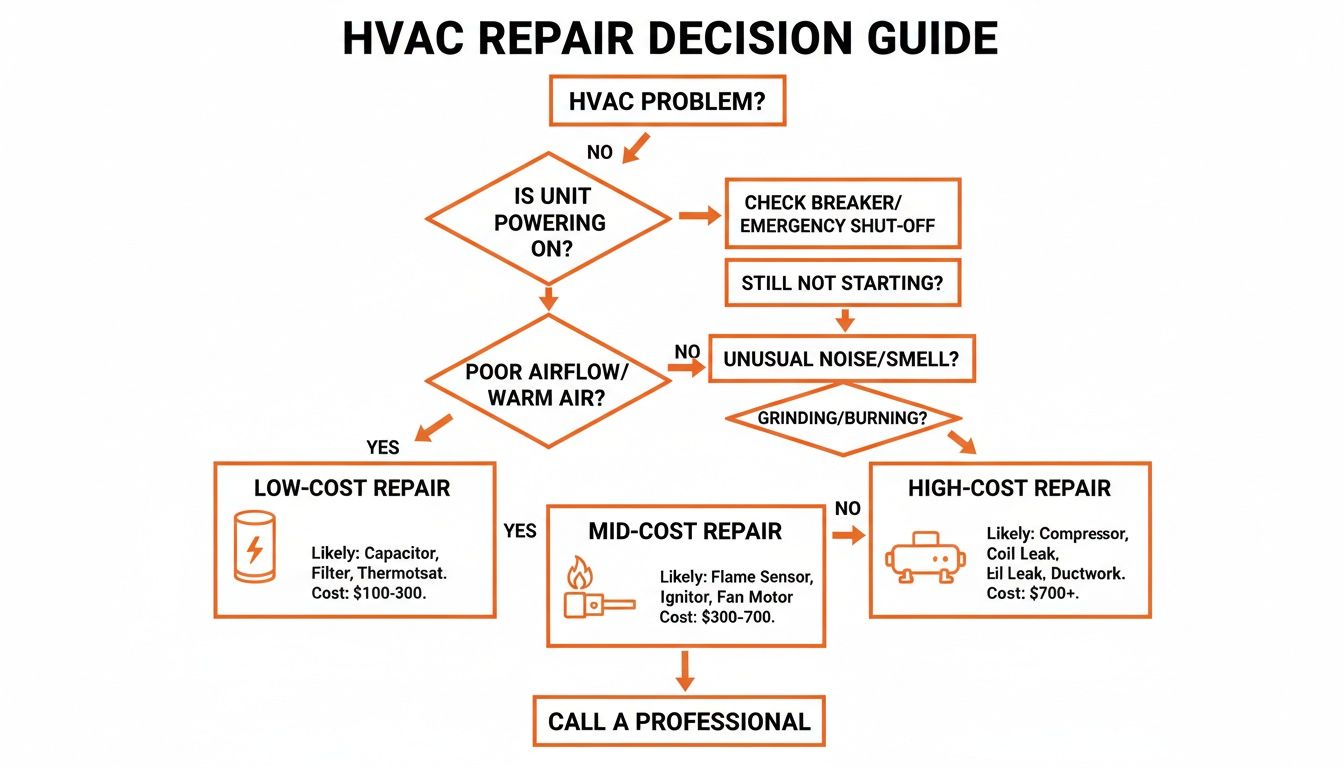
As you can see, small, low-cost repairs are usually a no-brainer. But once you're looking at a high-cost fix for a critical component like the compressor, the conversation almost always shifts toward considering a full replacement.
Smart Strategies To Lower Your HVAC Repair Expenses
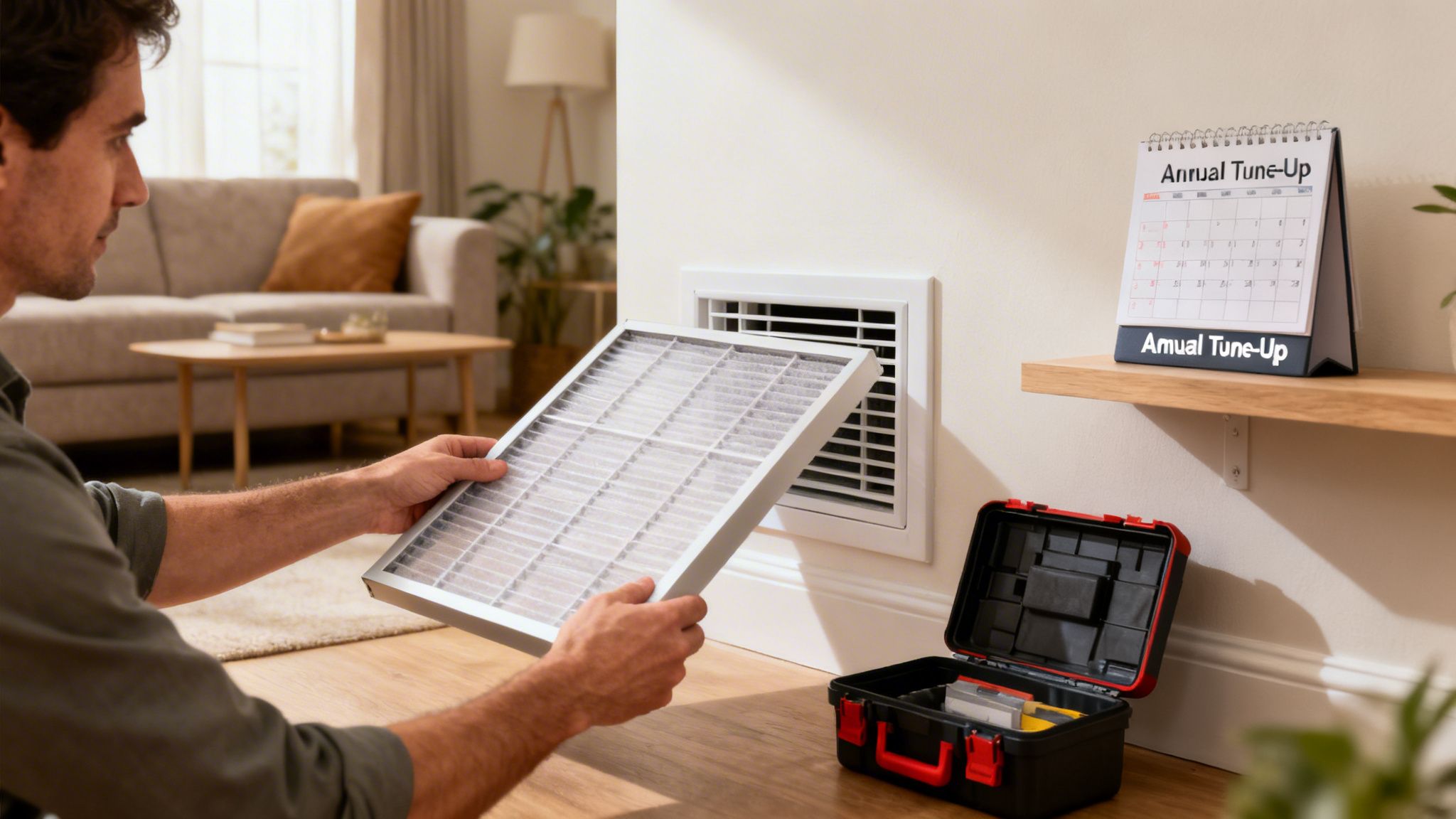
While a surprise HVAC bill can throw a wrench in anyone's budget, you have more control over these expenses than you might realize. A few proactive habits can make a huge difference in your long-term costs, keeping your system running reliably and your wallet happy. The secret is shifting from reactive fixes to preventative care.
Think of your HVAC system like your car. You wouldn’t dream of driving it for years without an oil change, would you? The same logic applies here. An annual tune-up is easily the most effective way to head off expensive breakdowns before they start.
Embrace The Power Of Preventative Maintenance
Scheduling professional maintenance once or twice a year is a smart investment, not an expense. During a tune-up, a technician inspects, cleans, and tests all the critical components. They’re trained to spot things like a weakening capacitor or a fraying belt long before it fails and leaves you sweating in July or freezing in January.
This proactive approach is more important now than ever. HVAC repair costs have been climbing due to economic pressures—equipment prices shot up roughly 40% since 2020, and U.S. gear costs jumped nearly 7% in 2023 alone. With manufacturers announcing more price hikes, an annual tune-up is your best defense. You can find more HVAC statistics from ServiceTitan.com that highlight these trends.
An annual maintenance plan is like a health check-up for your HVAC system. It catches small issues before they snowball into expensive emergencies, potentially saving you hundreds or even thousands of dollars.
Simple Steps You Can Take Today
Beyond calling in the pros, a few simple DIY tasks can have a massive impact on your system's health and efficiency.
- Change Your Air Filters Regularly: This is the easiest and most important job on the list. A clogged filter forces your system to work much harder, straining parts and driving up your energy bills. Check it monthly and plan on replacing it at least every three months.
- Keep Your Outdoor Unit Clear: Your outdoor condenser unit needs to breathe. Make sure it stays clear of leaves, grass clippings, and other debris. It’s also a good idea to trim back any shrubs or plants to give it at least two feet of clearance on all sides.
- Get Multiple Quotes: When a repair is unavoidable, don't just accept the first price you're given. Reach out to at least three reputable, local contractors to compare their pricing on both parts and labor. This is the best way to ensure you're getting a fair market rate for the work.
Be Smart About Scheduling And Warranties
A little knowledge and good timing can also work in your favor. If your issue isn't a true emergency, try to schedule the service during regular business hours. You’ll avoid those premium after-hours or weekend fees, which can easily add $100 to $250 to your final bill.
Finally, get familiar with your warranty. If your system is under ten years old, it’s worth checking whether the failed part is still covered by the manufacturer. This could save you the entire cost of the component, leaving you responsible only for the labor.
Taking these smart, consistent actions will dramatically reduce what you spend on HVAC repairs over the life of your system. For more ideas, check out our guide on HVAC maintenance tips to save money and extend lifespan.
Got Questions About HVAC Repair Costs? We’ve Got Answers.
Even after you've seen the numbers, it's completely normal to have a few more questions rattling around. When you're trying to figure out how a repair bill will fit into your budget, the details really matter. We've gathered some of the most common questions homeowners ask us—here are the straight-up answers you need.
Our goal is to give you that extra bit of clarity so you can handle your next HVAC headache with confidence.
Is the Diagnostic Fee Really Necessary?
For the most part, yes. Think of the diagnostic fee as paying a specialist for their expert opinion before they start treatment. It’s a standard, necessary part of any professional repair.
This fee, which usually runs between $75 and $150, covers a trained technician’s time, gas, and the use of specialized tools to figure out exactly what’s wrong. Without a proper diagnosis, any repair is just a shot in the dark. The good news? Some companies will waive or credit this fee if you move forward with their repair, so it never hurts to ask about their policy right up front.
How Do I Know I'm Getting a Fair Price?
Making sure you’re getting a fair deal comes down to doing a little homework. The single best thing you can do is get more than one quote.
- Call at least three licensed and insured local HVAC contractors. This lets you compare not just the final number but also how they break down their costs for parts and labor.
- Always ask for an itemized estimate. A good company won't hesitate to give you a written quote that clearly separates the cost of parts, labor, and anything else.
- Check online reviews. Look for companies with a solid history of happy customers who mention fair pricing, professionalism, and quality work.
Be wary of a quote that's way lower than the others. It can be a red flag for cheap parts or an inexperienced technician.
Does Homeowners Insurance Cover HVAC Repairs?
This is a big point of confusion, and the short answer is usually no—at least, not for breakdowns from normal wear and tear. Your standard homeowners insurance policy is designed to cover damage from sudden, unexpected events like a fire, a lightning strike, or a tree crashing down on your outdoor unit.
Here’s the bottom line: If your 15-year-old furnace just gives out from old age, your insurance isn't likely to help. But if a power surge during a storm fries its control board, you might have a legitimate claim. The only way to know for sure is to review your policy or call your agent to understand what's covered.
How Long Will the Repair Actually Take?
The time it takes to fix an HVAC system can vary just as much as the cost. It all boils down to how complex the job is and whether the technician has the right parts on their truck.
A simple fix, like swapping out a thermostat or a capacitor, can often be done in less than an hour. On the other hand, a more involved repair—like replacing a blower motor or hunting down a refrigerant leak—could take anywhere from two to five hours. If a special part needs to be ordered, you might have to wait a few days for it to arrive before the job can be finished.
Feeling overwhelmed trying to find a trustworthy HVAC pro on your own? AirCon Heat makes it easy. We connect you with top-rated, vetted local contractors who provide free, no-obligation quotes for your repair. Find a reliable pro in your neighborhood by visiting https://airconheat.com today.